Art Museums in Madrid: From the Golden Triangle to Hidden Gems
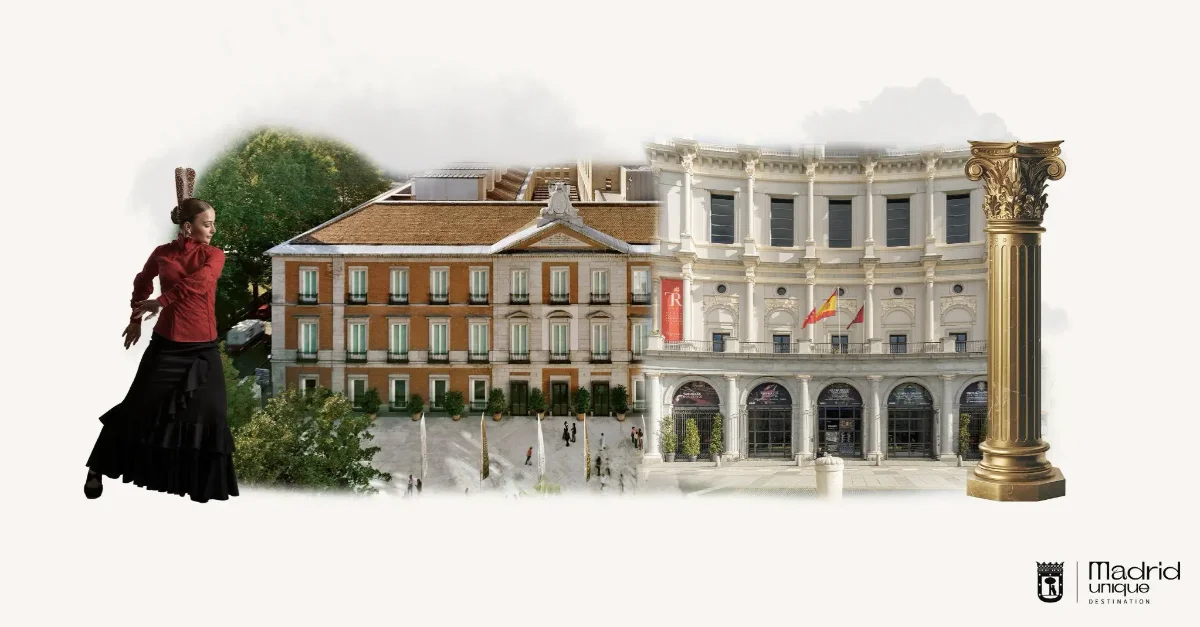
Discovering the art museums in Madrid is an experience that captivates art lovers from all over the world, a dream shared by travellers and locals alike. Strolling along its streets feels like stepping into an open-air museum, yet its art galleries house treasures that deserve your full attention.
From the masterpieces of the Thyssen-Bornemisza Museum and the bold collection at the Reina Sofía Museum to the centuries of history unfolding at the Royal Collections Galleryopens in a new tab and the spaces of Patrimonio Nacional, every visit awakens the senses. The San Fernando Royal Academy of Fine Arts and the Royal Tapestry Factory round off this journey, revealing the artistic legacy and textile craft that make the city unique.
Here you will find a complete guide to the art museums in Madrid that you simply cannot miss, from the great classics to the capital's hidden gems, ready to be discovered.
Madrid's Art Triangle
Right on Paseo del Prado are the three major art museums in Madrid known as the Art Triangle or Golden Triangle: the Prado Museum, the Reina Sofía Museum and the Thyssen-Bornemisza Museum.
Prado Museum
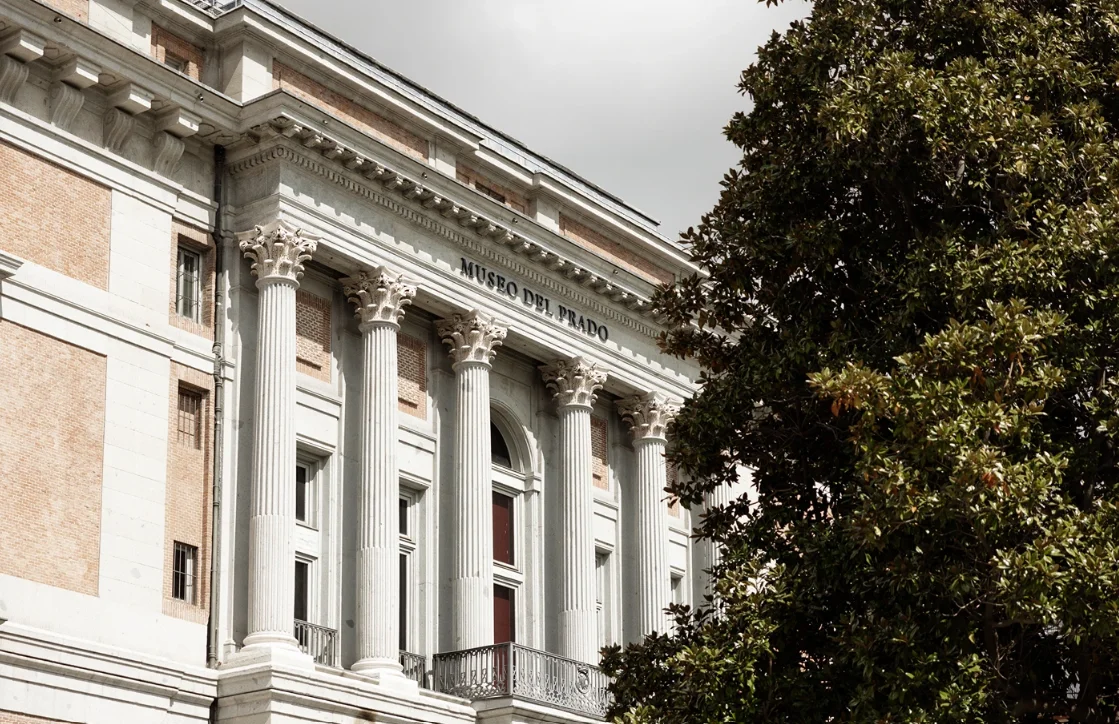
One of the most important art museums in Madrid and the world. The Prado Museum boasts a permanent collection of more than 8000 works, making it an essential stop for understanding European painting between the 16th and 19th centuries.
The Prado is home to masterworks by artists such as Goya, Velázquez, Rubens, Rembrandt, Bosch, Raphael, El Greco and Titian, among others
Highlights among its rooms include the Central Gallery and those dedicated to Velázquez and Goya. Opening hours are extensive: it is open Monday to Saturday, 10am–8pm, and Sundays and public holidays, 10am–7pm. General admission is around €15.
Reina Sofía Museum
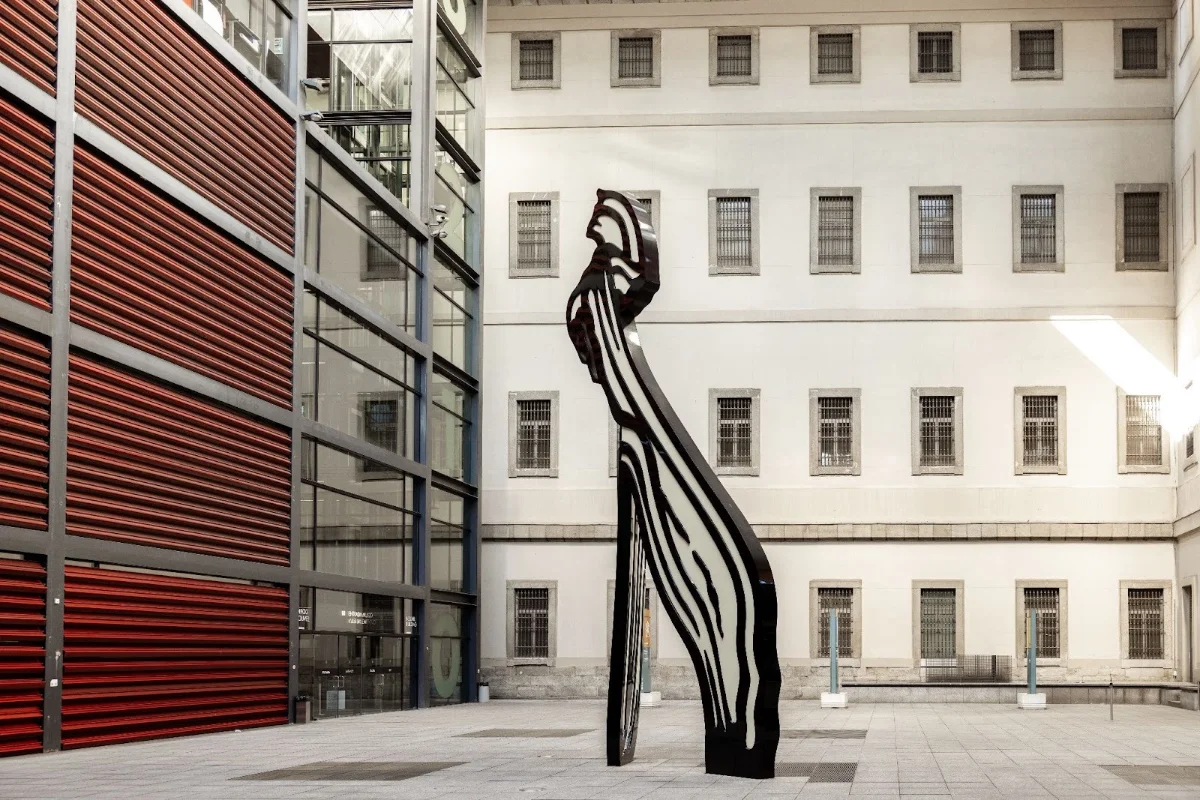
Housed in the former San Carlos Hospital, the Reina Sofía Museum is Spain’s premier modern art gallery and one of the most visited art museums in Madrid. The museum occupies two complementary buildings: the historic neoclassical Sabatini Building, once part of the former hospital, and the modern extension designed by architect Jean Nouvel, which together house iconic works such as Picasso’s Guernica, Ángeles Santos’s Un mundo and pieces by Dalí, Miró and Gris.
A living, ever-evolving space, the museum blends its permanent collection with temporary exhibitions and cultural events, making it a cornerstone of the city’s artistic life. For those seeking a more exclusive experience, private small-group tours are available, including the galleries surrounding Guernica before official opening hours, allowing you to enjoy the works in peace and away from the crowds.
The Reina Sofía Museum is also a hub of creativity and contemporary thought in Spain, hosting lectures, activities, seminars and academic chairs that explore current issues through the eyes of today’s artists and thinkers. It also features two restaurants and a specialist bookshop that draw art lovers from all over the world.
The main building (Sabatini and Nouvel) is open on Mondays and from Wednesday to Saturday from 10am–9pm and on Sundays from 10am–2.30pm (closed on Tuesdays). The El Retiro Park venues (Velázquez Palace and Glass Palace) are open daily from 10am–7pm.
Thyssen-Bornemisza National Museum
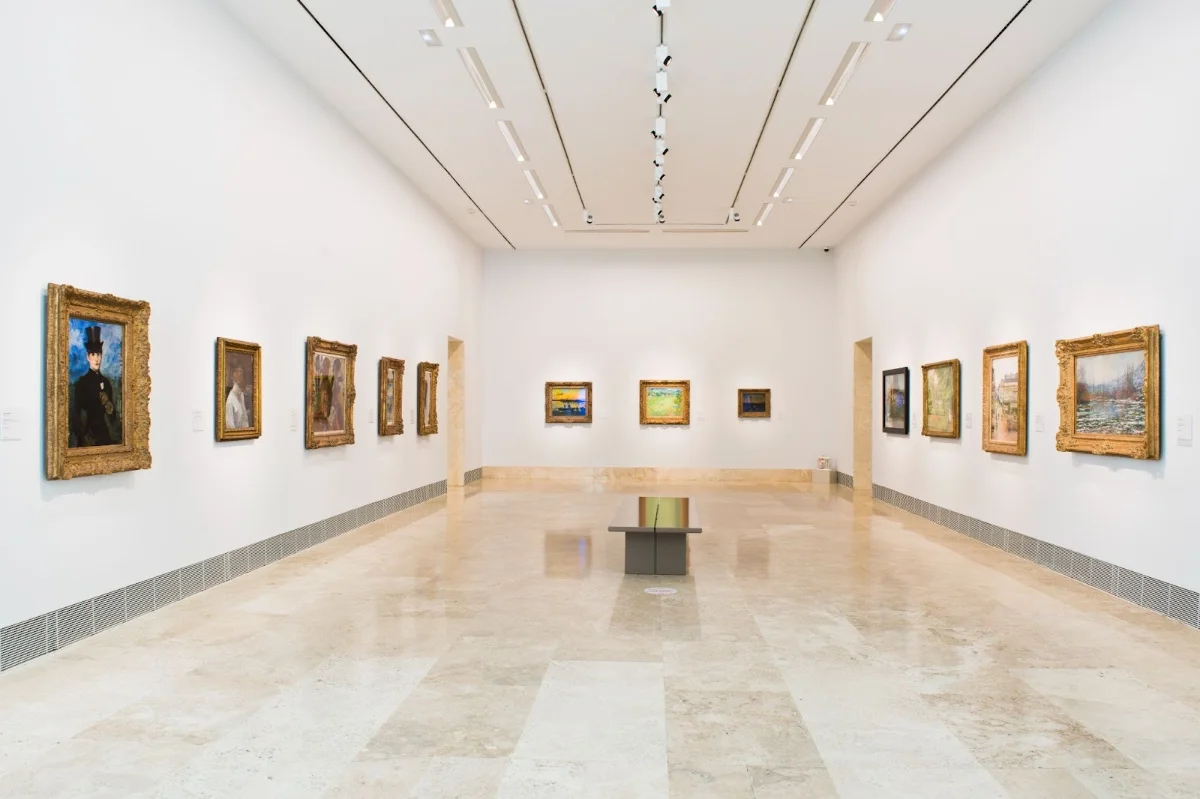
Completing the triangle is one of the most iconic art museums in Madrid in the country. Now publicly run, the Thyssen-Bornemisza Museum boasts one of the most important private-origin collections in Europe. Spanning from the Renaissance to the 20th century, its rooms showcase Renaissance, Baroque, Impressionist and Expressionist masterpieces, featuring acclaimed artists such as Titian, Caravaggio, Rubens, Rembrandt, Monet, Cézanne, Van Gogh, Picasso, Kandinsky and Dalí, offering a unique journey through the history of international painting.
Beyond its permanent collection, the museum offers experiences that pair your visit with other sides of Madrid's cultural life, from gastronomy and flamenco to shopping and wellness, making it possible to experience art in a truly complete and personalised way.
The museum is open Tuesday to Sunday from 10am to 7pm, and on Mondays free of charge from 12pm to 4pm.
Beyond the Art Walk, Madrid is home to must-visit spaces that reveal the sheer richness and diversity of its artistic heritage, including the royal legacy. Some are widely celebrated, while others await discovery, offering fresh perspectives beyond the great classical museums. We invite you to step inside and explore their galleries and unique venues below.
Royal Collections Gallery
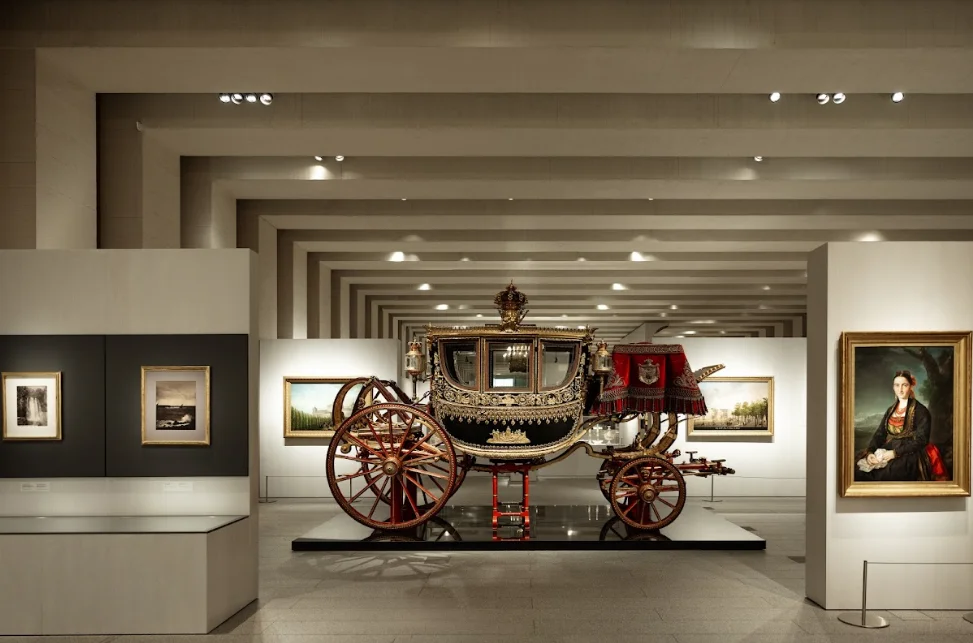
The Royal Collections Galleryopens in a new tab, managed by Patrimonio Nacional, is the latest and most ambitious project among art museums in Madrid. Its innovative, award-winning building hosts a journey through five centuries of art and history, featuring works by masters such as El Greco, Velázquez, Caravaggio and Goya, alongside tapestries, armour, porcelain, furniture, photography and many other valuable collections. In addition, the route includes the oldest surviving section of Madrid's Arab wall.
You can round off your visit with admission to the nearby Royal Palace of Madrid, the capital's most visited monument and one of Europe's most beautiful and best-preserved royal palaces. Spanning more than 135,000m², it has borne witness to centuries of Spanish history. It is also one of the few official residences of heads of state open to the public, drawing over 1.6 million visitors every year to discover its rooms, artworks and world-unique treasures.
Both—the Gallery and the Palace—offer private tours that grant access to areas off limits on general admission, enhancing an already spectacular route with bespoke cultural experiences of the highest calibre.
The Gallery is open Monday to Saturday from 10am to 8pm, and Sundays and public holidays from 10am to 7pm. The Royal Palace opens at 10am and closes at 7pm in summer and at 6pm in winter, closing one hour earlier on Sundays and public holidays.
San Fernando Royal Academy of Fine Arts Museum
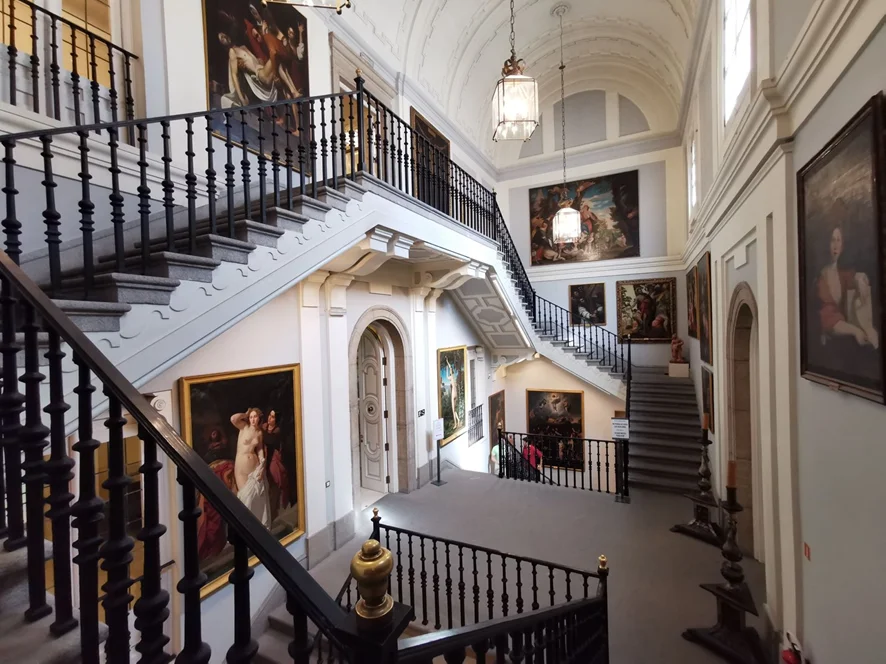
Located on Calle de Alcalá, the San Fernando Royal Academy of Fine Arts doubles as an academic institution and a museum, whilst keeping two centuries-old workshops fully operational: the National Calcography Printmaking Workshop and the Casting Workshop.
Founded in 1752, it houses one of the country's finest picture galleries, with works spanning five centuries. Its collection includes 13 paintings by Goya alongside pieces by masters such as Zurbarán, Murillo, Arcimboldo, Rubens and Ribera. In 2024 it unveiled new rooms dedicated to Goya's graphic work, cementing its status among the benchmark art museums in Madrid devoted to the great masters.
The San Fernando Royal Academy of Fine Arts can be visited Tuesday to Sunday from 10am to 3pm, including public holidays, and continuously on Saturdays until 7pm. opens in a new tabIt is closed on Mondays.
For those seeking a more exclusive experience, private tours are available that reveal the secrets of graphic art and blend culture and heritage, offering unique access to the Royal Academy alongside a tour of Galería Canalejas, weaving history, architecture and gastronomy into a single journey.
Royal Tapestry Factory
The Royal Tapestry Factory represents the excellence of Spain's textile craft tradition, dedicated to safeguarding this living heritage for the future. Founded by Philip V in 1721, it produces tapestries, carpets and heraldic hangings using centuries-old artisan techniques and finest-quality materials such as Spanish Merino wool, cotton and jute. Meanwhile, its textile restoration department stands out for the applied technological innovation it brings to conserving historic fabrics—including tapestries, carpets, heraldic hangings and other textiles—proving that tradition and technology can seamlessly coexist.
While not a conventional Madrid art museum, it offers guided tours by advance booking, with morning slots Monday to Friday between 10am and 1pm, and occasional sessions at 4pm from Monday to Thursday.
These visits take you inside its historic workshops, restoration rooms, dye garden and working studios, where visitors can watch the textile creation process up close, learn about centuries-old tapestry and restoration methods, and watch demonstrations of traditional crafts that keep this heritage alive.
Sorolla Museum (temporarily closed)
Set in the Chamberí neighbourhood, inside the former home and studio of Valencian painter Joaquín Sorolla, the Sorolla Museum preserves the most comprehensive collection of his canvases, drawings and personal belongings, as well as an exquisite Andalusian garden designed by the artist himself.
Since 1 October 2024, it has been temporarily closed for an extensive expansion and refurbishment of the museum. This jewel among Madrid's art museums is scheduled to reopen in 2026 with new exhibition galleries.
Lázaro Galdiano Museum
Housed in a lavish 19th-century building on Calle de Serrano, this museum holds the impressive private collection of publisher and patron José Lázaro Galdiano.
Across its galleries you will find paintings by Goya, Hieronymus Bosch, Murillo, Zurbarán and El Greco, as well as sculptures, weaponry, timepieces and a library of more than 20,000 books. It is one of those lesser-known art museums in Madrid that surprise visitors with the remarkable quality and variety of their collection.
Cerralbo Museum
The former residence of the Marquess of Cerralbo has been preserved just as it was in the late 19th century. Its lavishly decorated rooms and its collection of paintings, sculptures, weapons, porcelain and furniture transport you back in time.
Works by Zurbarán, Ribera, Alonso Cano and El Greco hang alongside tapestries and ceramics. It is one of the most intimate and recommended art museums in Madrid.
La Neomudéjar Museum
An experimental art centre located right next to Atocha station. Specialising in video art, performance art and sound art, it has become a haven for alternative creators. If you are looking for art museums in Madrid with a difference, this space is sure to surprise you.
National Museum of Decorative Arts
At the National Museum of Decorative Arts, various rooms and settings are recreated, from a medieval drawing room to a contemporary dining room, taking in Gothic, Renaissance, Rococo, Empire and Art Nouveau styles, among many others. On display are tapestries, furniture, ceramics, glassware and toys from the 15th to the 19th centuries.
Although most of the exhibits are Spanish, there is an important collection of pieces from abroad, including items from the Ming and Qing dynasties.
This museum complements the city’s classic art museums in Madrid by showing how taste and aesthetics are reflected in everyday objects.
Museum of Romanticism
Romanticism was a cultural, artistic and literary movement that emerged in Europe in the late 18th and early 19th centuries as a reaction against the logic of the Enlightenment and Neoclassicism, characterised by the exaltation of emotion, imagination, individualism and creative freedom.
Housed in a lavish building designed in the neoclassical style, the Museum of Romanticism recreates 19th-century domestic settings with paintings, furniture and everyday items. It offers a fascinating insight into Madrid society of the era and the profound influence of Romanticism on art and daily life. It is one of the most evocative art museums in Madrid for history enthusiasts.
Open-Air Sculpture Museum (currently under restoration)
Beneath the overpass that connects Calle de Juan Bravo and Calle de Eduardo Dato, right on Paseo de la Castellana, lies an impressive display of abstract sculptures by artists such as Miró, Chillida and Alberto Sánchez. This open urban space invites you to take an open-air stroll dedicated to art and contemplation, serving as a living extension of the art museums in Madrid right in the city centre. Although the museum remains open, several pieces are currently undergoing restoration as part of a conservation project that will continue over the coming months.
Colección SOLO
A private initiative bringing together works by contemporary international artists, with a distinctive focus on illustration, sculpture and digital art. This exclusive experience requires booking by prior appointment.
Juan March Foundation
An exhibition centre offering free admission, showcasing contemporary art, photography and music. Highly regarded among art museums in Madrid for the exceptional quality of its programme.
Chapel of San Antonio de la Florida
Known as the “Sistine Chapel of Madrid”, it houses Goya’s breathtaking frescoes and his tomb. Admission is free of charge, making it an unmissable stop on any visit to the city.
Sala Alcalá 31 and Sala Canal de Isabel II
Run by the Community of Madrid, these exhibition halls host contemporary photography, design and art exhibitions. Admission is free of charge, and thanks to their dynamic schedule, you will always find fresh and inspiring proposals. They are the ideal complement to the major art museums in Madrid for discovering emerging talent.
María Cristina Masaveu Peterson Foundation
The María Cristina Masaveu Peterson Foundation is a private non-profit institution established in 2006 and located in the Chamberí neighbourhood. Spanning more than 2000m² across three floors, the building features versatile exhibition rooms, an auditorium, courtyards and terraces, as well as site-specific pieces created especially for the venue, such as Silencio by Jaume Plensa and Altiva by Blanca Muñoz.
Since 2021, the Foundation has featured an Espacio Street Art dedicated to urban art, showcasing acquisitions by national and international artists such as Ai Weiwei, Banksy, Keith Haring, Yayoi Kusama and Okuda San Miguel, alongside patronage projects.
Nomad Immersive Museum
Located on Gran Vía, next to Plaza de España, this centre immerses visitors in a futuristic, dreamlike journey created with optical illusions of light, special effects and artificial intelligence applied to art. With limited capacity to ensure the best possible experience, the Nomad Immersive Museum turns the audience into an active part of the exhibition.
Manuel Benedito Foundation
Inaugurated in 2002 on the initiative of his niece and adoptive daughter Vicenta Benedito, the Manuel Benedito Foundation is dedicated to preserving and promoting the work of this prominent Valencian portrait painter. The space is housed in the artist's former home and studio in Madrid, where he worked until his death.
The foundation exhibits the artist's personal collection alongside pieces acquired later, offering a comprehensive overview of his career. Advance booking required.
Garment Museum
This Madrid art museum offers a fascinating journey through the history of fashion and clothing in Spain, from the 18th century to the present day. Through garments, accessories and textiles, you can discover not only the evolution of trends, but also how clothing mirrors culture, identity and social change. It brings together aesthetic richness and an ethnographic perspective, introducing visitors to the artistry and creativity woven into everyday life.
La Casa Encendida
La Casa Encendida is a cultural centre in Madrid that brings together contemporary art, education and social action. Through exhibitions, workshops and participatory activities, it connects artists and audiences in an open, dynamic dialogue, offering an inspiring taste of urban creativity. Rather than a traditional museum, it is a space where art is experienced, shared and reinvented every day, connecting visitors with the city's most innovative cultural scene.
Matadero Madrid (Centre for Contemporary Creation)
The city's former municipal slaughterhouse has been transformed into a major centre for contemporary creation. Its industrial bays host cutting-edge art exhibitions, cinema, theatre, dance and experimental projects. Check the website before visiting, as it regularly hosts temporary art exhibitions. Many of the activities are free of charge. Exploring Matadero will remind you that art museums can also reinvent themselves within industrial spaces.
Beyond art museums, Madrid offers an array of cultural venues that enrich any visit: some, such as the Museum of Popular Arts and Traditions or the History Museum, complement an artistic tour; others, like the National Museum of Natural Sciences or the National Anthropology Museum, step away from art to offer fresh perspectives on the city and its heritage. Here are just a few of these standout spaces.
Museum of Popular Arts and Traditions
Housed in a former 19th-century corrala tenement in the Lavapiés neighbourhood, this ethnographic museum reveals how the people of Madrid and other Spanish regions lived and expressed themselves. Through traditional costumes, tools and everyday objects, it offers a fascinating counterpoint to the city's major art museums, shedding light on the evolution of customs, trades and popular craftsmanship.
History of Madrid Museum
Trace the evolution of the city through scale models, paintings and historical artefacts. A visit here adds valuable historical context to the collections in Madrid's art museums.
Museum of the Americas
The Museum of the Americas brings together more than 25,000 pieces tracing the history of the American continent, from pre-Columbian cultures to the present day. Its collection includes Mayan and Incan ceramics, Aztec masks, ritual objects and works from the colonial period. The tour is arranged around themes such as religion, power, society and communication.
National Archaeological Museum (MAN)
Founded in 1867, it gathers and preserves archaeological and artistic treasures from Spain's history and around the world. It holds around one million pieces, although only a selection is on permanent display.
The collections span periods ranging from Prehistory to the contemporary era, taking in Roman, Visigothic, Islamic and the Middle Ages. It is also famous for its numismatic collection of some 300,000 coins, making it one of the richest museums in this field.
National Museum of Anthropology
At the National Museum of Anthropology, you will find African musical instruments, traditional Asian costumes, objects from the indigenous cultures of the Americas and an ethnographic collection from Oceania.
The permanent exhibition is complemented by temporary displays tackling themes such as migration, cultural identity and the relationship between art and society.
National Museum of Natural Sciences
Founded in 1771, the National Museum of Natural Sciences is one of Madrid's oldest museums. In its exhibitions you will find dinosaur skeletons, fossils, taxidermy specimens, minerals and models of the planet's flora and fauna. It is an ideal spot for families and nature lovers.
Its aim is to bring science closer to the general public in an engaging, educational way. If you are looking for different things to do compared to traditional art museums in Madrid, this venue will surprise you with its scientific and informative approach.
Frequently asked questions about art museums in Madrid
When is the best time to visit the museums?
It depends on each museum, but generally early morning is less crowded and allows you to enjoy the exhibitions at an unhurried pace.
Are there combined tickets for art museums in Madrid?
Yes, the Paseo del Arte (Art Walk) Pass allows you to visit the Prado Museum, Reina Sofía Museum and the Thyssen at a reduced price.
Are any museums free of charge?
Many art museums in Madrid offer free admission hours or free entry days. Always check their websites for up-to-date opening times.
How much time should you spend at each museum?
There is no set time for visiting the museums. We recommend taking your time to experience and appreciate the artists' works. If you are wondering how long a typical visit takes, we recommend allowing around 3 hours for the Prado Museum, and at least two hours for the Reina Sofía Museum and the Thyssen. Museums such as the Lázaro Galdiano or Cerralbo can be explored in an hour and a half.